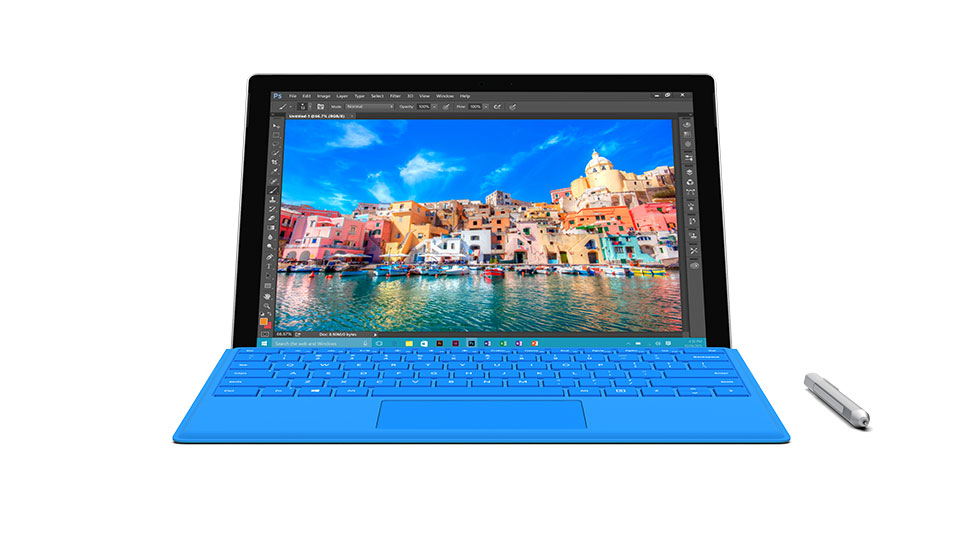
With the release of the iPad Pro 9.7", Apple are finally trying to convince us that the iPad can replace our laptops. Is this because of some great leap in features or functionality? Or are they responding to an increasingly convincing threat from Microsoft's Surface range?
Showing posts with label microsoft. Show all posts
Tuesday, 5 April 2016
Monday, 27 October 2014
OS no-OS
Every once in a while an article appears saying something like "the OS is irrelevant because everything is on the Web now".
Yet, why can't I use my iApp on my android? Or on my mac, for that matter?
The current stress point in software is the OS. Apps are proof that the Web, while being a wondrously sticky medium, has a long way to go in democratising devices. If I want to build an app to be used across all devices I must build it for browser use. Or I must build 6 concurrent versions of it (3 desktop OSes, and 3 mobile OSes), which is not cheap, and depending on the app, not effective use of resources. In practice I'll pick the 2 most popular, usually Windows + either Android or iOS and extend when the revenue or funding kicks in.
But why can't the browser do it all? Surely if the browser was the OS, we wouldn't need apps? Well, HP actually tried it with Web OS. As with so many of HP's recent innovations, it was a brilliant concept poorly executed. The devices were under-powered, and the marketing was crap. The HP Veer is still, physically, one of the nicest phones I've ever held.
And now we have chrome and chromebooks able to run Android apps. Presumably Apple will follow, with OSX able to run IOS apps. But what about Apple TV too? It would need a better input device, like Kinect. Talking of Kinect, Microsoft, ironically, are probably the closest to seamlessness between their devices, with Windows, Windows Mobile and Xbox software all being sold in the one marketplace. Shame their user interface and many of their apps are so inconsistent.
The thing is, apps are the best way to lock users into your platform. And for hardware makers, like Apple, the platform is everything. It is not in their interest for you to be able to run everything on the Web. It is in Google's interest: a cynic's view of Android is that it is a Google knowledge capture and advert delivery system. It's also in Microsoft's interest: they are laggards in both cloud and mobile, but gaining fast by slipstreaming the leaders. Google and Microsoft are software businesses, and even Microsoft have proven themselves bold in building apps for other OSes. They know that the proprietary app phenomenon is temporary: one day everything will run through your browser, on any device.
Tuesday, 11 June 2013
Windows 8 verdict: daft UI
Monday, 7 January 2013
Apple Developers
My team has an iPhone app, that was originally developed over a year ago. It's not great, developed by a third party who clearly didn't understand our core product, but it was a good start. The project manager at the time got us onto the Apple Enterprise Developer Program because it was envisaged that we'd only distribute the app per client, through their existing secure web interface.
I arrived and decided that we needed to make the app generic (rather than recompiling it each time for each client) and distributed through the App Store. The Apple Enterprise Developer Program was up for annual renewal in December so I renewed, thinking that, since it cost double the Basic Developer Program, that it would be an extension of the basic Program. That I could simply log into iTunes Connect and publish our app to the App Store.
But no. I had to pay extra for the Basic Developer Program. Not only that, but the only way I could find this out was by phoning their support people. The Developer website was curiously dumb (user unfriendly, Apple?) about my options. It also listed the Programs I was enlisted on as though I could join multiple Programs, yet is seems I could not. Even the support staff person seemed surprised that I could not add the Basic Developer Program to my existing Enterprise Developer Program license.
So now I have to start the entire licensing process from scratch. If you've never done it, it is a palaver involving Dunn & Bradstree numbers, certificates galore (user certificates, app certificates etc.) and patience. Lots of patience.
All this so that I have the privilege of paying them 30c of each App Store-earned $ - the so-called Apple Tax. I'm not adverse to paying taxes if they are going towards a good cause, but when they're forcing me to pay twice for effectively the same thing (the Basic Developer Program), and then taxing my revenue stream I have to ask why I should bother.
The reason most people bother is because it's the "Jesus Phone", the darling of trendsetters and jetsetters all over the world. But the sheen is starting to fade, and the competition has not only closed the gap but they appear to be evolving faster. Faced with such adversity, the key audience you must do everything to retain are your loyal acolytes: the developers. That is the true essence of Microsoft's longevity, and Apple would do well to learn from it.
I arrived and decided that we needed to make the app generic (rather than recompiling it each time for each client) and distributed through the App Store. The Apple Enterprise Developer Program was up for annual renewal in December so I renewed, thinking that, since it cost double the Basic Developer Program, that it would be an extension of the basic Program. That I could simply log into iTunes Connect and publish our app to the App Store.
But no. I had to pay extra for the Basic Developer Program. Not only that, but the only way I could find this out was by phoning their support people. The Developer website was curiously dumb (user unfriendly, Apple?) about my options. It also listed the Programs I was enlisted on as though I could join multiple Programs, yet is seems I could not. Even the support staff person seemed surprised that I could not add the Basic Developer Program to my existing Enterprise Developer Program license.
So now I have to start the entire licensing process from scratch. If you've never done it, it is a palaver involving Dunn & Bradstree numbers, certificates galore (user certificates, app certificates etc.) and patience. Lots of patience.
All this so that I have the privilege of paying them 30c of each App Store-earned $ - the so-called Apple Tax. I'm not adverse to paying taxes if they are going towards a good cause, but when they're forcing me to pay twice for effectively the same thing (the Basic Developer Program), and then taxing my revenue stream I have to ask why I should bother.
The reason most people bother is because it's the "Jesus Phone", the darling of trendsetters and jetsetters all over the world. But the sheen is starting to fade, and the competition has not only closed the gap but they appear to be evolving faster. Faced with such adversity, the key audience you must do everything to retain are your loyal acolytes: the developers. That is the true essence of Microsoft's longevity, and Apple would do well to learn from it.
Subscribe to:
Posts (Atom)