Showing posts with label technology. Show all posts

Thursday, 12 May 2016

iPhone SE - welcome back!


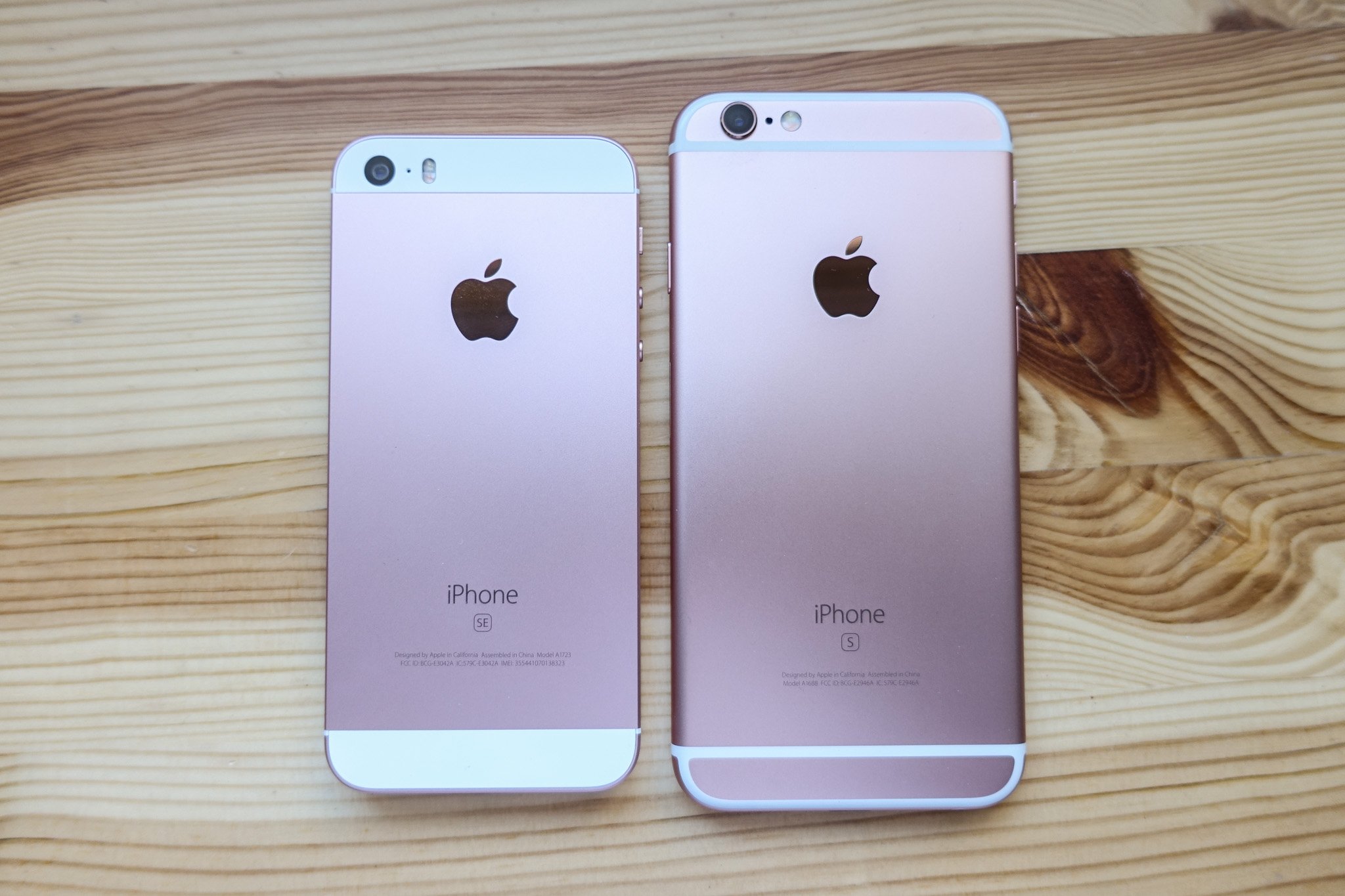
My iPhone 6 took a swim a couple of weeks ago. A short swim in the sea with a waterproof bag that wasn't. I reverted to my Android spare (a 1st generation Moto G), which was sufficient but slow. I contemplated a faster Android. The thing is, as the article here shows, they all have massive screens. As I've said before they are a poor compromise for me: too small to be a proper reading/viewing device (so I have a paperback-sized iPad mini), and too large to be a handy phone.

I remember thinking, on the recent launch of the iPhone SE, that it was a smart move. The iPhone 5 was the nicest phone I have ever used: comfortable to hold, with hand clasped right around it, and easy to use, with thumb capable of touching all 4 corners of the 4" screen without spraining or dislocating. The SE is an update: all the newest chips and sensors in the old body, and 25% cheaper than an equivalent iPhone 6. Best of both worlds, in principle, but faced with the real prospect of replacing my phone, would I actually buy it?

The latest Android phones have overtaken Apple's renowned user experience, at least in terms of sheer features. There are gadgets and slidey expandable bits, and it's all quite intuitive in Material Design: the subtle shading guides you on what can be pressed and slid. App design is a bit more haphazard, but that's the price of freedom from Apple app store stringencies (and their 30% tax). Very impressive but maybe a bit over-complicated, I thought, as I read the reviews from my iPad.

Then there's the Android phone hardware. You get a lot of bang for your buck, these days. Widescreen TV resolutions on small inches of screen, zillion megapixel cameras, SD card expansions, fast charging USB 3 ports, octo-core processors with gigahertz of speed. There's a lot of variety, a lot of power consumption and big batteries behind those big screens... just to run as smoothly as an iPhone. Perhaps that's the real reason the screens are so big: a selling point to offset the bigger battery needed to power all those cores?

I was in Atlanta on a biz trip, so thought I'd pop into an Apple store to try an iPhone SE. Failing that, I'd pop over to Best Buy and try some Androids.

Picking up the SE surprised me with the emotional connection it evoked. It felt like a favourite pair of shoes or jeans. Comforting and familiar. Super snappy to use too, unlike my old iPhone 4, which has slowed with age.

I've had it a week now and am thoroughly delighted. Except for one thing: having used my Pebble watch with the Android I now see how restrictive Apple is with their API for non-Apple watches. Guys, it doesn't make me want to buy an Apple watch, it just hobbles an otherwise perfect phone. Easy fix. Now to order that waterproof case...

Tuesday, 5 April 2016

iPad as PC replacement. Really?


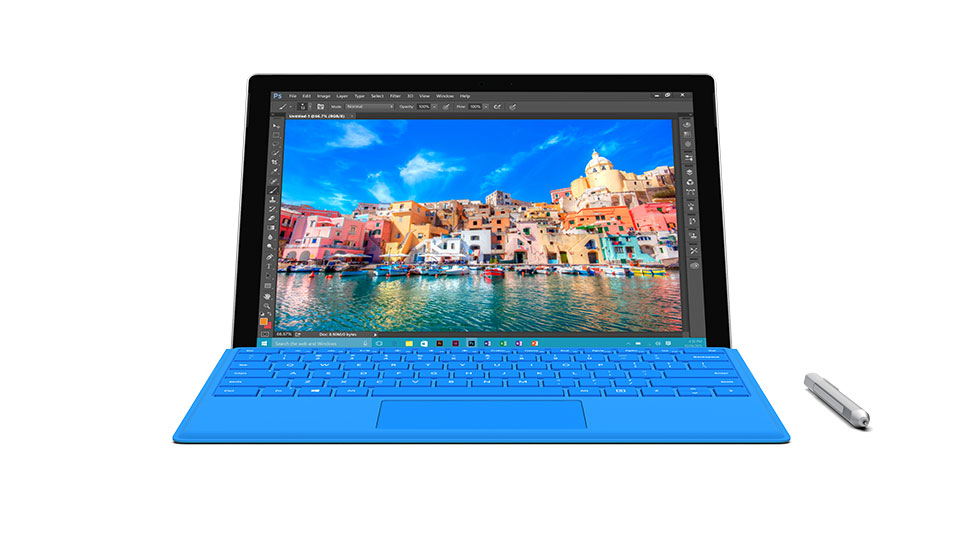
With the release of the iPad Pro 9.7", Apple are finally trying to convince us that the iPad can replace our laptops. Is this because of some great leap in features or functionality? Or are they responding to an increasingly convincing threat from Microsoft's Surface range?

Thursday, 10 September 2015

Comfortably numb: Apple hyperbole is boring


Last week Apple announced their Autumn 2015 line of hardware. I avoid the live events these days, as they're a bit too sycophantic for me. The triumphalist tone is fine for internal corporate event, but for a public event it's a bit crass. So, instead, I skim various reliable news sources for the gist. Usually, the famous Jobs "reality-distortion field" is pretty effective, even since his death, and much of the press gushes with as much hyperbole as Apple itself. Not this time.

The mainstream sites are rarely, if ever, damning of Apple, but the levels of praise were distinctly fainter this year. Sure, it's an 'S' year, which is usually just upgrades to existing kit, but the point is that the hyperbole was full force and, yes, unwarranted.

Don't get me wrong, I love their passion for their work. I know the guys at Apple are feverish about the details. But not everything they do deserves the "incredible" or "epic" labels. There are refinements this year, but there's nothing new. There's nothing 'epic' or 'incredible', and to claim so is to dilute the power and impact of those prior triumphs.You can find other versions of all this stuff from competitors. Yes, Apple tech is probably smoother and more integrated but it also costs 50% more.

The trick of Jobs' reality distortion was to suspend disbelief, to maintain that fragile bubble of attraction and interest without over-inflating it with hyperbole. When the stuff wasn't ground-breaking, he'd still delight in it but would use words like 'neat' and 'cool', and avoid vacuous, overblown words like 'epic', 'awesome' and 'incredible'. I get the sense that Cook, Schiller et al are trying to press the same buttons, but it's mimicry rather than feeling.

There have been quite a few mock Apple adverts out there, like the Ikea catalogue.

It's almost like nobody at Apple has seen them. Or they have, but just can't change the formula.

So keep the products rolling, Apple, but please show a bit more sensitivity with your tone.

Wednesday, 22 July 2015

Apple Watch: cracks showing?


From this story and similar it's easy to interpret that the honeymoon period of the new product category is over. Apple cynics proven right? Or markets just being fickle? A bit of both.

I'm an Apple sceptic: love their stuff, but not the reality distortion and unnecessary product lock-ins that often accompany it. Overall, they are a healthy part of the technosphere, which is not easy for a behemoth.

Something is clearly wrong with their Apple Watch sales. So they are below expectations, but why not publish them anyway? Apple's profit margins are normally huge on anything they sell, so even if the volumes are lower than expected, it's not like they'll have failed financially, is it? I think the absence of information, in this case, could work against them not just in the markets, as it has already shown, but in consumer confidence. In this internet age, consumers like to to make informed decisions, so any perception of withheld information fuels lack of confidence, and, arguably, is just as easy to exploit by a canny competitor.

But they had to do it. For Apple not to have a watch in this still-embryonic but burgeoning wearables market could have been perceived by the markets as leaving money on the table. And this first offering is pretty decent: all the buttery smooth and shiny user experience features are there. It's just not essential or different enough from the iPhone. I doubt anyone in late 19th or early 20th century had a pocket watch and a wrist watch.

This is the first step on a product journey, a marker. Remember, the first iPhone didn't even have copy & paste. But then Apple defined the category and were so far ahead of the competition they could take their time perfecting the product. This time, the category is already quite crowded and despite their behemoth status they didn't own it. Do they have the agility to evolve faster than rivals?

If you compare the pace of innovation in iOS versus Android, you'll see that since about 2013 Android has outpaced Apple. Android in 2015 is a lot better than Android in 2012, whereas iOS is a bit better. This isn't about which OS is better, but about which OS is improving the fastest.

But Apple is a hardware company. And I think the reasons the Apple Watch is not a giant success are hardware-based, from the basic: battery life; to the sublime Dick Tracy fantasy: a camera. These limitations are understandable to geeks: the science simply isn't there yet. But the average Apple consumer thinks it's all magic anyway, so will expect Apple to crack these things in version 2 or 3. Can they? I can't think when they've ever had this much competitive pressure in hardware. This should get interesting.

Thursday, 9 July 2015

Algorithmic Big Brother


There's a lot of FUD about internet companies harvesting personal data.

Don't get me wrong, I'm a privacy advocate: you should have the right to be as private as you like, and whatever data that is held about you by a third party should be disclosed to you, and accessible on request.

But let's not put the tin hats on every time we hear that Tech Firm X is harvesting your data. I'm sure they are, but ask yourself why. Google and Facebook aren't interested in my secrets. They are interested in

  1. Selling my profile info to advertisers
  2. Providing me a better service so that I keep coming back and they can satisfy (1).
You'll agree that point 2 is innocent/benign enough. If you have a fundamental problem with entities selling info to advertisers then stop buying things and stop using 'free' services. If you're not the paying customer, you're the product. Get used to it.

The issue, and where the media like to blur and sensationalise, is the definition of 'my profile info'. What info are they collating & selling, and what are they doing with it? This is where things get shady. The quick answer these firms all give, when asked, is a variant of point 2 above: that the data is used to offer better-targeted advertising and services to you the cust- consumer.

Right, but what data, exactly? And how are you packaging it up to the advertisers to whom you're selling it? The answer, in most cases, is that they are not selling the information like a secret service dossier - a big brown file on you. They are simply categorising you. The advertisers then say what categories they want to target, which could be broad (all females between 18 and 30) or very specific (chess players and sci fi fans in New York city under the age of 24). These firms then ensure you get hit by those adverts that match your category. They then track which ones you click and which you don't, and that gets reported back to the advertisers. In fact, in the case of social networks, these firms track every unsecured page that you browse and refine your categorisations accordingly.

Point is, the advertisers don't get the specific info about you. They get aggregated category data. Heineken don't know which beer I drink unless I tell them (by 'liking' or '+ing' a page of theirs); they just know that I'm in several of their key categories.

The categorising tech firms are as interested in me as a lawnmower is in grass. They don't have time/resources to compile a dossier on you or me. They have algorithms that profile us automatically and constantly, but primarily in order to meet the 2 commercial imperatives above.

So if you're worried about Google or Facebook or Apple prying into your private life, only the algorithms are watching.

Government agencies?  Different story: why would they be harvesting your data? Again, it's mostly algorithms, but there's no commercial imperative. So it's definitely personal and potentially nefarious. 

Wednesday, 1 July 2015

CIO: caretaker or gamechanger?

I saw this article ("The era of IT-as-a-roadblock must come to an end right now", TechRepublic) and thought it worth sharing, as it reflects something bothering me for years about the role of IT in businesses.

I've led IT teams and departments, and, as a CTO selling software and services to clients, meet IT heads quite often. Some of them running IT for well known brand companies. You can tell a lot about a company by its attitude to IT. Even the job title of the head of IT is still varied and indicative: VP ICT, or Head of IS, or CIO, or more recently Head of Digital. Some are on the board/exec team, some report to the CFO or COO.

Then there's the small talk: get any team in the company in a room together for a day (as we often do at my consulting firm) and see whether a) an IT topic comes up, and b) it's a negative comment. I'd give a 75% chance of both.

Traditionally, I'd put this down to the struggle of IT: what other department of a company has to deal with the turmoil of its industry effectively reinventing itself every 3-5 years? Take Finance: the CFO is probably the best accountant in the firm - certainly the most experienced. General Ledgers don't really evolve and GAAPs evolve as carefully as prudent accountants and auditors would allow. The CIO, on the other hand, has probably never used the technologies they are responsible for. Sure, they'll likely know the principles and implications, but they are fully dependent on the knowledge and skills of younger staff in deploying and maintaining new technologies. Furthermore, nobody outside of IT could keep up: why must I trade in my Blackberry for an iPhone? Why so many passwords? In this context, it's little wonder that IT departments would often be as fretful, self-absorbed and moody as a teenager. They effectively were teenagers.

Then it all changed with the arrival of mobile apps and app stores. How many training courses have you been on to learn a mobile app? Me neither. Suddenly everyone was configuring their own personal computing device in their own way. And demanding the same ease of use for other software. That contact management software at work started to feel really clunky.

Developers, be they desktop, web or app software, suddenly had to focus carefully on user experience (UX). If they didn't, the results were there for all to see: poor app reviews and few downloads.

The IT department was now having to contend with consumer devices and apps on the corporate network because the users found them more useful, were going to use them anyway, and, well, it's all technology, innit? Would they step out from their server rooms and support desks and embrace the mobiles, the apps, the clouds? Or would they bridle at the users' initiative, and chafe with disdain at the cloud? 

The results so far appear mixed. There are certainly many IT departments showing fear, usually in the form of disdain for technology initiatives coming from users, security concerns, or "hidden" costs. They've finally got what they always wanted: an engaged audience. We're finally over the hump and now technology illiteracy is not cool, nor even quaint. If you don't have a smart phone, or know how to use one, you're a dinosaur. The world has realised IT is about the information, not the technology (thank you Apple!). Unfortunately, many IT departments haven't yet. 

Monday, 29 June 2015

It's Pebble Time: taking on the mighty Apple Watch


The best personal tech should be invisible. Not literally, that would be unhelpful. But it should fit into your life seamlessly, without significant adjustment to your life, unless it augments it. Smart phones are a brilliant example: you already had a mobile phone, but here's one with more sensors and downloadable apps. Super productivity or super distraction? Your choice, but either way you're ostensibly happier.
Henry Graves Supercomplication Pocket Watch
Remember pocket watches? No, I never wore one either, but I imagine they were the mobile phones of their day. Before them, you had to find or hear a clock somewhere, usually a church or a school or a station. Suddenly you had the power of time in your hand. 

Then, in 1968 Patek Phillipe made, arguably, the first wrist watch. It was intended as jewellery for ladies, who often didn't have pockets for a watch. As the technology improved and became more rugged, soldiers adopted them. The pocket watch didn't fade away, it just added features, culminating in the Henry Graves Supercomplication, made by Patek Phillipe in 1933 and still the most expensive watch in the world ($24m at last auction in November 2014).

Point is, the problem of conveniently telling the time was, effectively, solved with the wrist watch. But it has barely evolved since. Despite watchmakers' enduring ability to sell absurdly overpriced lumps of metal because they'd work on the moon, or at 10,000ft underwater, these lumps are functionally redundant, for the most part. Like handkerchiefs. Most millennials don't wear a watch because they have a smart phone with network/atomic accuracy.

So if you're selling a smart watch you're either trying to persuade a youngster to wear something useful on their wrist, or persuade an older person to replace their expensive birthday present for something more useful and equally elegant.

Smart watch?

The original Pebble was a great concept in 2013: a watch that listens to your phone (both Android and iOS!) and lasts a week. Biggest Kickstarter project ever at the time. And they delivered what they promised. Now, I'm a big watch fan, have about eight at any given time, but it didn't attract me because the screen was black and white only and the case was too big. It looked like a 90s Nintendo Gameboy for your wrist. Without the retro fun.
The original Pebble. Neat but ugly.
But earlier this year Pebble ran another Kickstarter campaign to build the Time: promising colour screen and slim form factor yet still the 5 day battery life. All the other smart watch makers are targeting looks and features, but these guys are sticking with their formula and refining it. Many people scoffed at the paltry 64 colours and lack of touchscreen, but those of us with some electronics knowledge realise that full colour touchscreens burn battery life, and what's the point of a watch you have to plug in every day? Might as well just use your phone. At $189 it's $100 cheaper than a Casio Pathfinder or Citizen Ecodrive. So why on earth not? I backed it.


Pebble Time!

It's very light - feels lighter than the strap - and pretty slim. The strap is smooth and soft, with a little stretch to it. One of the best I've worn in terms of chafing, which is no small thing for my hairy wrists. After 10 mins wearing it I pretty much forgot it was there, so big tick in the 'invisible' box.

Screen

Classic elegance... with weather
While the screen is a decent size, there's still a lot of real estate not used. No doubt Pebble sought to maximise screen size within technical constraints, but what about solar panels in the frame or that outer bezel? Even though a Pebble consumes about 5x the power of a solar watch, like a Pathfinder, solar top-up could still potentially increase battery life by 20%.

Outdoors... with stats
The screen is a bit dim in some light, needing a shake of the wrist to activate the backlight. Not a big issue (I know many lump of metal wearers who have their straps so loose they have to wiggle their wrists to haul the watch into view anyway), but there's currently no control of the backlight timer, so it may fade too quickly causing you to have to shake again. Frustrating, but easily rectified (please, Pebble!). Thankfully, there are loads of watchfaces, and many have colour configuration options, so it's easy to find one that is hi-viz.

Notifications

It's a similar story for notifications: I can't control them as well as I'd like in two ways: first, being able to mute some apps. You can do it on the phone, but why not on the watch too? Secondly, there's just one buzz signal. I've seen pebble apps that offer multiple buzz combinations, and it would be great to make better use of these in notifications. I don't know if the Time buzz motor supports variable strengths, but that would be great too.

Buttons & gestures

The buttons are excellent, and the motion sensor is really well tuned to different movements, which some apps, like the OutDoorWatch app (above), use to great effect. Move your arm laterally, like throwing a frisbee, toggles the bottom section of the screen to switch displays between, say, a barometer graph and a compass. Shake your wrist side to side once slowly and the middle section changes. With the combination of buttons and wrist shakes I don't miss a touch screen.

Battery

Battery life is as advertised: 4-8 days depending on use. 4 days if you're mucking about with it all the time, and using watchfaces that update the weather every 20 mins.

Microphone

The watch has a mic for voice control, but it's not well supported yet. This could be a brilliant addition to a beautifully simplistic watch, allowing you to literally call up all those voice-enhanced features of your smart phone from your wrist: voice memos, Siri or Google Now etc.

Apps

As you look through the Pebble App store you get the sense that developers are either waiting for the crowd's reaction, or being passively discouraged by the incumbent app store owners. Not only did Apple delay release of the Pebble Time app on the iOS AppStore (they relented after a social media campaign), but they have made some of the API functionality of iPhones exclusive to the Apple Watch, shutting out Pebble from offering some more enhanced features in the iOS version. No such apparent limitations on the Android version, so the Android version of the Pebble app has better app features available than the iOS version. Let's hope Apple play fair and open it up. There's plenty of room in this fledgling market, and no need for Kickstarter-backed David vs biggest market-cap in the world Goliath.

The trouble is that this sort of friction makes third party developers jittery. So while some of the main app contenders, like Evernote and RunKeeper have Pebble apps, some of their competitors, like Strava and OneNote don't.

In addition to their C-based development environment, Pebble have released a Javascript framework intended to attract non-hardcore developers to lash their mobile app APIs to a simple Pebble app. I haven't tried it, but the fact that I'm tempted says a lot for this little device. 

Smart Straps?

As you see from the picture above of the back of the Pebble, the strap has quick-release pins for so-called smart straps. These are add-ons that offer more hardware features, like more sensors or batteries, or both. This could be a killer feature, if you think about it. Some ideas here.

Conclusion

The Pebble Time is light and almost invisible, and has fitted into my life seamlessly: I'm not scurrying around to find charging points, nor am I stroking it every five minutes like a cat with ball of wool. The subtlety of wrist-based notifications is not to be under-estimated: a quick glance at your wrist is significantly less effort than hauling that buzzing widescreen out of your pocket only to find that you've received a spam text. The apps that I do have are also just right for the wrist: running app, music app, misfit app, authenticator app, travel app - those activities that you don't want to be digging out your phone for. 

So there's all that subtlety and convenience that Apple Watch reviewers have been raving about. Except this watch costs half an Apple. 

There's another Apple-beating convenience too: the biggest convenience factor in every watch since Patek Phillipe's in 1868: battery life. The only Apple watch reviews I've seen that have reported battery life to be 'fine' are by techies who probably already plug in five devices a day. Let's see if real consumers are just as glowing about one day of battery life after the novelty has worn off. I don't doubt that it's a beautiful piece of kit, but is it useful enough to warrant daily charging? Unless it replaces your phone completely, like the wrist watch did the pocket watch, it never will be.

My only concern with the Pebble Time is that its potential never gets fulfilled; that it gets crushed by less functional but more glamorous and wealthy competitors. In these days of social media and crowdsourcing they don't need much clout to hold their own and gather support, but they need to do it fast.

Show us some smart straps, get that damn mic working, sort out the notification buzzes and we could have a winner here!

Wednesday, 14 January 2015

Occam's mobile

Mobile phones are making too many assumptions. I got an iPhone 6 back in October, and a refurbished iPad mini 2 for Christmas. So I've been pondering this for a while... In this age of miniaturisation it may have struck many people as odd that Apple increased the size of their latest iPhone version. The iPhone 5 had a 4" screen, and now the iPhone 6 has a 5" screen, with the iPhone 6 plus having an even larger screen. Whatever Apple's actual reasoning, it's evident that big, flat phones are selling, as shown by the popularity of the Samsung Galaxy range of phones, some of which border on comedic in size.


But why?

Mobile phones have always been about portability, which is a combination of size and weight. But smart phones add another, much more complex dimension: functionality. Fundamentally, this is about 'the potential to do more', and has always been a key aspect of computing. For years the attractiveness of personal computers was deemed, at least by PC and software marketing people, to be about functionality: just look at all the stuff you can do with this thing!

The fact that most of us didn't use most of these features (an oft-cited myth was that no individual used more than 10% of any given Microsoft Office app) didn't seem to matter. It was the potential.

It seems that those same marketing people have migrated to the mobile space and have opted to hit the same buttons: more speed, more functions, more, more, more.

Less, please.

My iPhone 6, for all its curvy, groovy, big-screen, slim, slick styling, is too big. It's too big for me to hold securely while my thumb touches the button at the bottom to unlock it. It's slightly too bulgey in my trouser pocket, looking either like an armour plate or a dislodged codpiece, depending on my self-esteem that particular day. Initially, I liked the larger screen: bigger than my iPhone 5, so easier on the eyes. A bit easier to read a book, type a decent length email, or watch a video longer than a couple of minutes. But only a bit.

I wasn't planning to get an iPad. I had an iPad 2 and found it too limited to be a laptop replacement, and too bulky to carry around with the laptop. But I saw a refurbed iPad mini going cheap, so bought it. Now the iPhone 6 screen feels too small. The iPad mini is roughly paperback book size. I've carried paperback books on my travels since I could read. "Always have a book". It was ingrained into me as much as brushing my teeth. The iPad is that book in multimedia form. What's more, I have found that I use it for tasks that I would previously have done on my phone. So I've removed those non-essential apps from my phone in favour of the iPad.

I've dumbed my smart phone down. Now the functionality of the device is much more aligned to its portability. Notifications, quick replies, handy utilities, like maps and calculator, small games - all fine on the phone. Anything else deemed worthy of delving into a bag for goes on the iPad mini.

So what's the point of that bigger screened iPhone 6? No point. I'm eying up my old iPhone 5 and contemplating switching back.

Monday, 3 November 2014

The future of database technologies is pretty interesting, actually.

There's a good article here (ZDNet) about the future of databases. Key points:-

  • It's not just about SQL and 'noSQL', it's about data applicability. I couldn't agree more! There's so much blather about whether SQL is better than 'noSQL', and it all completely misses the point.
  • Most of this technology is open source, in some form. That is truly the awesome bit. It means that anyone so inclined can learn this stuff, practice it, master it and do incredible things with it.
Why is this important? Because databases are at the root of everything online. All that personal data you store in the cloud? Photos, emails, facebook stuff... it's all on databases. A few years ago everything was relational databases. There were other types, but they were 'specialised' and usually pricey, or academic. The best relational databases were not free, either. Now it has all changed, and much for the better.

Friday, 31 October 2014

Information Mobility

The ebb and flow of technological innovation is always most visible through the divergence and convergence of solutions to a particular set of use cases. Solutions diverge as innovation flourishes in new area where there are no standards and few rules. A plethora of options appears, then conventions are established. These gradually harden into standards, as dominant players emerge, and innovation ebbs. Or, more commonly in technology, flows into the next use case: ecommerce was the innovation ground until Amazon and eBay perfected it and the innovation moved to mobile.

In information technology the innovation use case, right now, is consumer connectivity. Social networks are the most direct symptom of this craving need. But it's clear that the need is broader than our friends' news feeds. 'Information mobility' is probably the most accurate label I can think of to describe the current innovation battleground.

The cloud and big data are simply grist for the mill: essential ingredients to staking a claim in the information mobility market and harvesting results. Example: it seems every app on my phone wants to see my contacts list. Why? Because it's effectively a prospects list for them. That's why every consumer-oriented company on the planet wants you to download their app: they want your rolodex. And we let them have it - cheaply. For the sake of crushing electronic candy.

Mobile devices are starting to converge on standards. You can still get a touchscreen for any size from 3" to 12", but the newest phones are congregating around 5"-6" and tablets 8"-10". With this convergence, the walls between vendor software ecosystems are increasingly being tested because people want their information anywhere. They want information mobility. If they cannot use your service from any device they may choose, why should they pay for it?


Monday, 27 October 2014

Smart devices and wearables

Are wearables the next big thing? Eventually, yes. But the benefits have to significantly outweigh the issues. My old Nokia 2110 phone could go without a charge for 5 days. Nearly all smartphones last less than 24 hours. Phone charging has become a cultural thing, be it the nest of cables in that part of the kitchen at home, or the sponsored pillar in the departure lounge. We don't mind because the utility of our smart phones is is massively greater than our old mobile phones. But will the same be said for wearables?

The concepts are brilliant: I love the short advertising movies about all the cool stuff you can do with your watch/glasses. But none of them mentions battery life. The Apple watch video mentions, at one point, the ability to monitor your health 'all day'. Google Glasses' battery life is about 3 hours. My Casio ProTrek PRW-3000 never needs charging (it's solar powered) and, in addition to monitoring temperature, atmospheric pressure and my direction, it is calibrated to an atomic clock every night. So it offers a bunch of useful to marginally-useful features for free, effectively. I don't need to disrupt my life worrying about whether it's charged, or accurate, or needs an update. It's a watch. We already have phones for portable smart stuff. They are so ubiquitous they might as well be wearable. So the real questions are:
  1. What are the watches/glasses going to give me that my phone doesn't already?
  2. Will it be worth the hassle of charging them at least once a day?
The mass market answers are, and will be for some years to come: 1. not much; 2. no.

Now, when the solar-powered ones, with colour e-ink screens start rolling out, then we have Watch 2.0. Until then, feel free to keep giggling at the chunky wrist and head gear crowd constantly looking for charging points.

As for the current set of portable smart stuff, the key advantage that Android has over iOS is choice. Not just a plethora of hardware options, but OS choices too - from roll-your-own to plain vanilla. And as Google get to grips with their Nexus line, and their Nest products, they may supersede Apple by addressing their core offering: no-fuss, tightly-integrated smart devices.

Don't get me wrong: I love Apple devices. I love the design, the childlike simplicity of them - they all pass the 'granny' test, unlike... well, any of my Android devices. But the business model irritates me. No, not the 30% App Store tax. That's just pricing. It's the disingenuity: Apple say that they want a seamless customer experience, unsullied by 3rd parties' lesser offerings. So why disallow users to buy Kindle books in the Amazon iApp? Because it competes with iBooks. Or disallow the Google Voice app? Because it competes with their network partners.

This is hardly 'doing what's best for customers'. It's doing what's best for Apple in the short term. In the long run it allows complacency to creep in because, as in sport, if you don't continue to compete with the best, on equal terms, you lose your edge. So, it's a finite game, highly dependent on lack of user tech-sophistication: such users want Apple to make the smart choices for them. But as their tech knowledge/skills evolve, they seek to make their own choices. iOS 8 is starting to open up, with 3rd party keyboards, and 3rd parties allowed to have space in the Notifications area. But you still get the sense that they are conceding ground grudgingly, rather than keeping the playing field level and beating their competitors through better products. On the hardware side, Apple still make the highest grade (and highest margin) devices on the market, but as the size and shape of smart device choices start to multiply (you can get a screen for just about every inch between 3.5 and 12 inches), one wonders whether they can keep up.

So where does the Apple watch fit in? Contrary to prevailing (fawning?) journalism, I think this is Apple playing catch-up. They are a hardware business at heart, after all, so if they don't have a wearable offering they could be in trouble. This is something that Google don't need to worry about because their platform is open: if they don't build it, someone else will, using their platform. It might compete with their own offering, but that just means they have to evolve faster.

And for the reasons mentioned at the start of this note, wearables will be all about speed of evolution.

OS no-OS

Every once in a while an article appears saying something like "the OS is irrelevant because everything is on the Web now".

Yet, why can't I use my iApp on my android? Or on my mac, for that matter?

The current stress point in software is the OS. Apps are proof that the Web, while being a wondrously sticky medium, has a long way to go in democratising devices. If I want to build an app to be used across all devices I must build it for browser use. Or I must build 6 concurrent versions of it (3 desktop OSes, and 3 mobile OSes), which is not cheap, and depending on the app, not effective use of resources. In practice I'll pick the 2 most popular, usually Windows + either Android or iOS and extend when the revenue or funding kicks in. 

But why can't the browser do it all? Surely if the browser was the OS, we wouldn't need apps? Well, HP actually tried it with Web OS. As with so many of HP's recent innovations, it was a brilliant concept poorly executed. The devices were under-powered, and the marketing was crap. The HP Veer is still, physically, one of the nicest phones I've ever held.

And now we have chrome and chromebooks able to run Android apps.  Presumably Apple will follow, with OSX able to run IOS apps. But what about Apple TV too? It would need a better input device, like Kinect. Talking of Kinect, Microsoft, ironically, are probably the closest to seamlessness between their devices, with Windows, Windows Mobile and Xbox software all being sold in the one marketplace. Shame their user interface and many of their apps are so inconsistent. 

The thing is, apps are the best way to lock users into your platform. And for hardware makers, like Apple, the platform is everything. It is not in their interest for you to be able to run everything on the Web. It is in Google's interest: a cynic's view of Android is that it is a Google knowledge capture and advert delivery system. It's also in Microsoft's interest: they are laggards in both cloud and mobile, but gaining fast by slipstreaming the leaders. Google and Microsoft are software businesses, and even Microsoft have proven themselves bold in building apps for other OSes. They know that the proprietary app phenomenon is temporary: one day everything will run through your browser, on any device.

Friday, 29 August 2014

The Remote Migrant

Here's an article I wrote for the British Computer Society about the pros and cons of remote working.

Tuesday, 12 November 2013

Tech trends, with double insights

This is a good article. It's a summary and opinion on the latest Gartner Tech predictions.

I agree with most of the opinions. Gartner makes its money on research, and, as such, is prone to exaggerate some preferred predictions - possibly in the hope that the very act of proffering them will lead to them occurring. Given their influence, it's not unreasonable, but it is a bias. So it's always healthy to view such research through the lens of a few opinions.

I agree with most of Chris Taylor's opinions, with some caveats of my own. It will be fun to review this post in a year's time...

Mobile device diversity & management: I'm with Chris on this. Enablement always trumps caution in technology, for better or worse. Technologists are always more interested in whether they can do something, rather than whether they should, and especially in software (that's why it's 'soft', right?). So ubiquity will work by 2018. The only constraint to it will be vendor lock-ins, not policies or standards.

Mobile apps & applications: I think Javascript is coming to the enterprise, so more enterprise apps will become web-based (or, more specifically, more desktop software companies will be able to build desktop-equivalent apps for browser). However, mobile-native apps will continue in the consumer space because there are a lot of vested skills in iOS and Android out there, and because companies like the vanity of having an app.

Internet of everything: it's seeping out, rather than exploding as many enthusiasts predicted it would. All it needs is one killer app, though, and it could rapidly come into its own. I imagine that app to be something like a cheap, SD card-sized Raspberry Pi, with sensors, micro USB connectivity (2, one for power, one for device(s) and really simplistic, user-friendly dev software.

Hybrid cloud and IT as service broker: I'm mostly with Chris on this. The issue with cloud is not security (that's a perception to address, though), it is integration. But, living in a developing country, I would not be as dismissive of the connectivity and jurisdictional issues.

Cloud/client architecture: this is just the same as the old client/server arguments. It ebbs and flows in roughly 5-10 year cycles: it's all about the client, then all about the server etc. I see no reason for that to change just because those servers are moving to the cloud.

Era of personal cloud: Agree, but I prefer to see it in more simplistic terms. As Marc Andreesen once wrote (in the WSJ, I think): software is eating the world. As more of our media is encapsulated in software (be it music, documents, patient records, news feeds, address books, hotel bookings etc.) the amorphous, invisible nature of software is taking hold in a very personal way.

Software defined anything: see above. Same thing, just the developer side of it.

Web-scale IT: see above. Same thing, just the enterprise side of it.

Smart machines: bit ambitious of Gartner to make predictions to 2020 (that's a century in IT terms!), but I agree with the gist that there will be some inflection point ahead based on smart machines, when we'll look back on Siri and Google Now as quaint pre-cursors to the main event.

3D printing: not convinced that this is any more than a cottage industry enabler. It's like printing: nearly everyone has a printer in their office and in their home, but we only really use them for office and home stuff.  If we want business cards or brochures we still go to the professionals. Same with 3D printing: the key inhibitors will always be cost of materials and mass customisation (why print my own trainers, when Nike can build me a custom pair for $120?). So the main benefit may be contextual: it stimulates the customisation efforts of mass producers.

Chris' own list is good for 2014, I think. That's the near-term direction things are heading.


Tuesday, 11 June 2013

Friday, 7 June 2013

Beware Android users

The most sophisticated bug for a mobile phone ever has recently been found by Kaspersky Labs.


Not only can it do real damage (eg. sending SMS to premium rate numbers), it has no user interface, no indication of the privileges it has (circumventing all of Android's usual 'this app can..' lists) and cannot be removed from compromised devices!

The hackers found no less than 3 unknown critical vulnerabilities, one even obfuscating the code to prevent analysis.

Details here (Securelist.com).

Kaspersky have notified Google, but this could cast serious doubts on the enterprise use of Android.

Thursday, 30 May 2013

The battle for the living room


This article (ReadWriteWeb) makes a good case for the next big consumer electronics battleground being in the living room.

It mentions, but doesn't really expand on, the key success criteria too: content, intelligence and user experience. Two of these are radically from traditional media. User experience is generational: older generations are used to being served content, to 'tuning in' to a broadcast. Whereas kids these days are very selective, and fickle about their content - they have to be because there's so much of it. So how to find the middle ground? That will be the critical challenge, and I suspect Apple will crack it first because that's what they excel at.

Intelligence on the web is massive, literally: every click or tap you make is tracked by something, somewhere. At the very least, it's the site you are on, more likely it is tracked by Facebook (if you browser is aware of your Facebook account), Google (ditto) and a few of the common advertising cookie trackers. Attach that to your TV and movie watching habits and that's a considerable portion of peoples' lives fully mapped. But data capture is only half the story. To engage and monetize you have to use the data intelligently. That's where Google have the advantage.

Content (which the article mainly focuses on) is the same issue as traditional media: it is still king, but cheaper to produce than ever. Sure, good stuff is still expensive, but that's about production, not distribution.

There's one other aspect that the article does not mention, but that I think will be vital: social.  Sharing content is a big thing already, but there's still some friction when you do it. Imagine a monetized version where you get a micropayment whenever you successfully share a piece of content (like, say, a movie trailer). There's also the participation aspect of social: gaming. Currently, there are very few multi-platform online games: an Xbox player cannot play with a Playstation player online. On some games they can play against PC players, but for quick reaction games the PC players have the advantage of a richer, more responsive interface (a mouse has a greater more accurate range of movement, plus a keyboard has more programmable combinations than a gamepad). This limitation is tolerable because consoles are primarily about games, with media playing being a bonus feature. In the future living room, audiences will not tolerate being restricted to sharing only with others on the same platform.

Wednesday, 8 May 2013

China hacking

While watching this video ( http://bloomberg.com/share/video/mB_vR3VcTA$pjOWVcVRO7w source: Bloomberg) it struck me as ironic that China's supposed control over it's people could work so badly against it, at least from a diplomatic perspective.

The telling stat is that 40% of the worlds hacks emanate from China, but only 10% from the US. Yet nobody accuses "the US" of hacking because state-sponsored naughty behavior is not what the US is about, right? Whereas when a hack comes from China it is heavily implied that it is state-sponsored. 

Maybe they just have script kiddies and organized crime too? There are 1.2 billion Chinese, so they could have hacking clubs larger than formal cybercrime entities in the West. Certainly, the organized crime is bigger. Also, given China's regime, those hackers would have to be pretty adept at covering their tracks, so you'd imagine that they'd figure out how to point the blame at the regime's institutions. Especially as it would suit the west's ideology to blame the Chinese state rather than a bunch of very good hackers who happen to be from China.

Maybe it is state-funded Chinese hacking, and they are probing ways to disrupt western economies and defense industries. While I can appreciate the latter, I don't think they'd need to resort to hacking to disrupt western economies. So who has been hacking Wall Street firms? Organized criminals seems a better bet to me.

Tuesday, 4 October 2011

Apple over-hyped

Having just seen the Apple event liveblog today (thanks @arstechnica), I'm actually disappointed.  I shouldn't be, but I am.

Is it because there was no iPhone 5, just an updated iPhone 4S, with some upgrade bits inside? Not really.

  • It doesn't have 4G support, just lots of +ve spin about new twin antennae that make it 'faster than most 4G phones claim' - so Apple are reduced to fighting claims with claims now?  I thought they left that to lawsuits.
  • It has a new camera, which is x% better than the old one - which was perfectly adequate.  Let's face it, we're never going to be doing portraits or feature films on phones, so who really cares?
Is it because iOS 5 just copies a bunch of stuff from Android (notifications, universal messaging, twitter built-in)? Not really.
  • It still doesn't have Android's killer feature: the universal 'share' button.  Imagine the built-in Twitter, but not just for Twitter, for any app that you allow.  So you want to share that document/pic/webpage to your blog? Fine. To Evernote? Sure. To another NFC device? No prob, if your phone can do it.
  • It still doesn't have WebOS's brilliant way of handling multi-tasking, with card decks and swipes.
  • iCloud is just doing what Android already does with Google (email, calendar, contacts) and Amazon (books, music, vids); it's probably more seamless, but taking 5 years to untether your iPhone from your PC/mac is rather more self-serving than customer-centric.
No, what bothers me is the same level of hyperbole, the same reality distortion, but without the innovation sparkle that used to justify the swagger.  I get the sense that Apple have reached an innovation plateau, like every successful company does, and rather than consolidating, toning down the hyperbole and just modestly pushing out these modest updates, they continue to shout about being the all-time most successful and revolutionary company of all time.

The Apple fan community doesn't help matters, as they all want the scoop on the next 'revolutionary' product, but I rather suspect that the next truly 'revolutionary' product is a few years away.

Apple, you're good: be comfortable with that. Tone it down and delight people with your modesty: don't let your words outstrip your actions.